
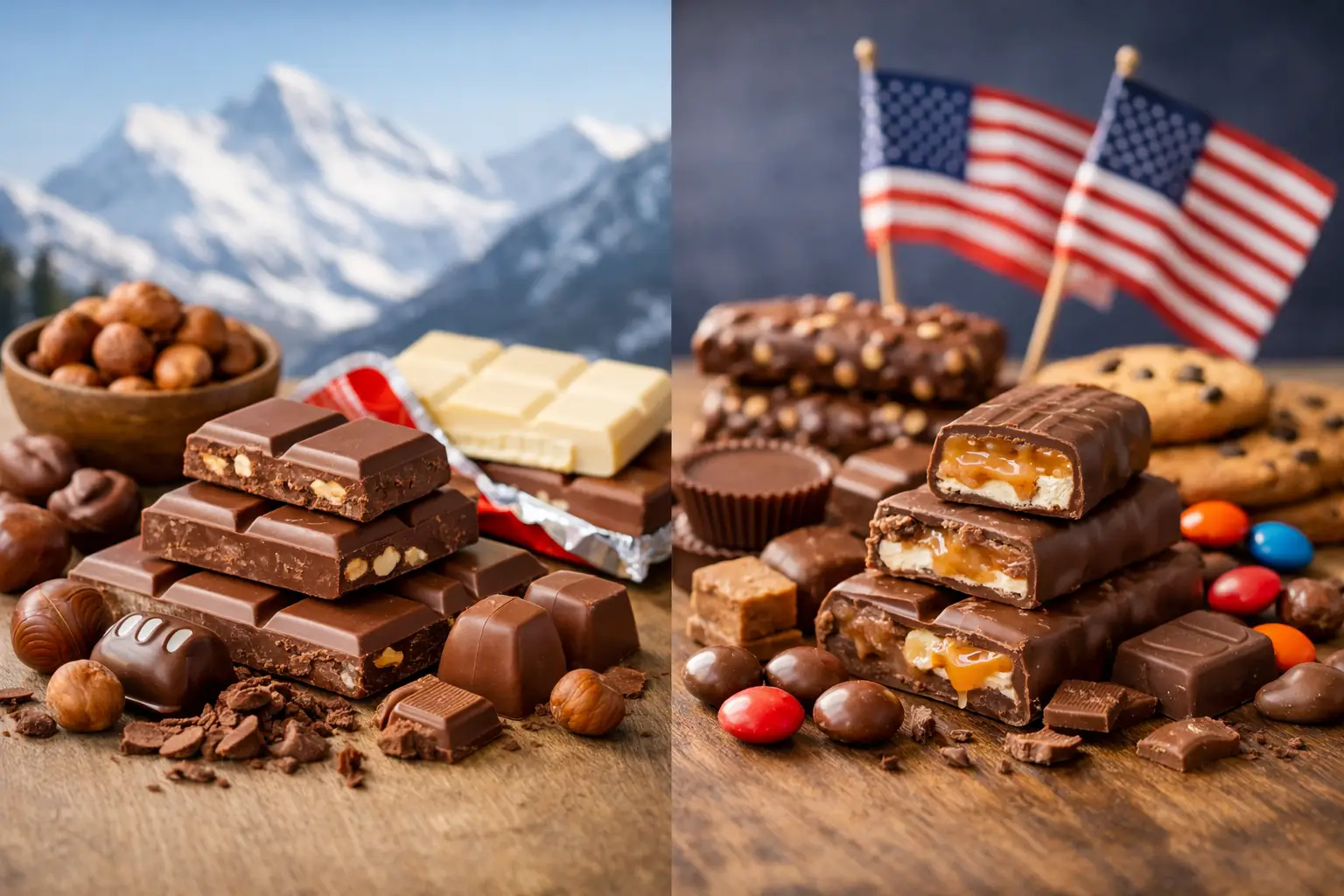
One bite usually tells the story. When people compare swiss chocolate vs american chocolate, they are often noticing something immediate – a smoother melt, a different sweetness level, or a richer milk flavor that feels more familiar to European chocolate lovers than what they find in many US grocery aisles.
That difference is real, but it is not just about one country making “better” chocolate than another. It comes down to ingredients, processing methods, taste preferences, and what each market expects from a chocolate bar. If you are shopping for authentic Swiss chocolate from abroad, understanding those differences helps you choose with more confidence.
Swiss chocolate vs American chocolate: what changes first?
The first noticeable difference is texture. Swiss chocolate is widely associated with a smoother, creamier mouthfeel and a cleaner melt. That texture is partly the result of refining and conching techniques that Swiss manufacturers helped popularize, but it is also about recipe balance. Many Swiss milk chocolates use generous amounts of milk ingredients and cocoa butter, which creates a rounder, silkier finish.
American chocolate can be excellent as well, but it often tastes sweeter, firmer, or slightly different in its dairy notes depending on the brand and production style. For some US consumers, that flavor profile is comforting because it is what they grew up with. For others, especially travelers returning from Europe or Swiss expats living abroad, Swiss chocolate tastes closer to what they remember as more delicate and less sharp.
The melt matters too. Authentic Swiss chocolate tends to soften quickly on the tongue, which lets cocoa, milk, nut, or praline notes open up in layers. With many mainstream American bars, the flavor can feel more direct and sugar-forward. Neither approach is automatically wrong – it depends on personal taste – but they create very different eating experiences.
Why Swiss chocolate tastes different
Swiss chocolate has a long reputation for precision, consistency, and milk chocolate expertise. That reputation did not appear by accident. Switzerland developed a strong confectionery tradition around milk chocolate, pralines, hazelnut combinations, and finely balanced filled bars that are now recognized worldwide.
A key factor is milk. Swiss milk chocolate is often valued for its creamy, rounded dairy character. Combined with careful processing and quality cocoa ingredients, that creates the mellow profile many shoppers expect from genuine Swiss-made chocolate. When a customer says Swiss chocolate tastes “smoother,” they are usually describing both texture and flavor harmony.
Another factor is cocoa butter use. Chocolate with a well-judged cocoa butter content usually feels more elegant in the mouth. It melts more evenly and carries flavor well. Swiss manufacturers are known for recipes that prioritize this kind of refinement, especially in premium packaged bars, boxed assortments, and seasonal specialties.
There is also a cultural expectation in Switzerland that chocolate should feel finished and polished. Even everyday retail bars often reflect that standard. For international buyers, that is part of the appeal: not just Swiss branding, but Swiss-made product quality that feels consistent from bar to bar.
Ingredient and flavor differences
When comparing swiss chocolate vs american chocolate, ingredients are where preference becomes personal. Swiss chocolate often aims for balance. You may notice creamy milk notes, cocoa flavor that stays present without becoming too bitter, and sweetness that supports the chocolate rather than dominating it.
American chocolate, especially mass-market milk chocolate, may lean more heavily into sweetness and a firmer snap. Some shoppers prefer that profile because it feels familiar and bold. Others find Swiss chocolate more refined because the flavors tend to integrate more smoothly.
Dark chocolate shows another distinction. Swiss dark chocolate frequently emphasizes clean cocoa flavor and a polished finish, whether the style is mild or more intense. American dark chocolate can range widely, from approachable sweet dark bars to more craft-oriented products with stronger origin character. So the difference is not always country versus country in a simple sense. It is often mainstream market taste versus a longer-established premium chocolate tradition.
Filled products also reveal a lot. Swiss chocolate is especially strong in praline, gianduja, hazelnut, almond, honey, wafer, and layered cream fillings. These products are designed with texture in mind. The shell, filling, and sweetness level are usually calibrated to work together. If you are buying for gifting, this is one reason Swiss assortments are so widely appreciated.
Texture, melt, and finish
Texture is where many first-time buyers become repeat buyers. Swiss chocolate is known for a fine particle size and a velvety finish. That may sound technical, but the result is simple: less graininess, a more even melt, and a more luxurious feel.
American chocolate styles vary more across brands, but many everyday bars are built for broad distribution and a familiar domestic taste profile. That can mean a different firmness, a sweeter finish, or a texture that feels less creamy than Swiss chocolate. Again, that is not necessarily a flaw. It reflects a different product tradition and different consumer expectations.
If you are choosing chocolate for a gift, the finish matters. A smooth melt and balanced sweetness tend to feel more premium, even before you look at the packaging. That is part of why authentic Swiss chocolate remains a popular choice for birthdays, holidays, thank-you gifts, and care packages sent to family or friends abroad.
Is Swiss chocolate always better?
Not always. If you grew up with American chocolate and enjoy that specific sweetness and flavor profile, Swiss chocolate may taste less nostalgic even if it feels more refined. Taste is personal, and familiarity plays a bigger role than people admit.
But if your priority is authentic Swiss origin, smoother texture, and a classic European milk chocolate profile, Swiss chocolate usually stands apart. It is especially appealing to Swiss expats, travelers who want to revisit a taste from a trip, and gift buyers who want something recognizably premium and genuinely Swiss-made.
The more useful question is not which country wins in every case. It is what kind of chocolate experience you want. If you want convenience-store familiarity, many American bars deliver exactly that. If you want a polished, creamy, export-ready packaged chocolate with strong Swiss identity, the choice becomes much clearer.
How to choose authentic Swiss chocolate online
If you are buying from outside Switzerland, authenticity matters. Many products on broad marketplaces use Swiss imagery without being truly Swiss-made. For buyers who care about provenance, it is worth checking that the chocolate is actually produced in Switzerland and sold as a genuine Swiss product rather than a Swiss-style imitation.
Brand recognition can help, but so can retailer specialization. A store focused on authentic Swiss packaged foods usually offers a more curated chocolate range than a generic marketplace. That matters when you are looking for classic milk chocolate bars, assorted pralines, nut-filled tablets, seasonal gifts, or familiar Swiss household favorites that are hard to find locally.
Practical details matter too. Chocolate for international shipping should be shelf-stable, consumer-ready, and packed for cross-border delivery. That is why specialized Swiss food retailers are often the better option for private customers who want real Swiss products sent abroad without the uncertainty of mixed-origin listings.
For many international shoppers, Swissfood.store fits this need well because the selection is focused on authentic Swiss-made packaged goods rather than lookalike substitutes. That makes the buying decision simpler, especially when you are ordering for yourself after a trip, sending a gift, or restocking favorite Swiss brands from abroad.
Who usually prefers Swiss chocolate?
Swiss chocolate tends to appeal most strongly to three groups. The first is Swiss expats and international residents who already know the brands and want the exact products they remember. The second is travelers who tasted chocolate in Switzerland and found that local supermarket options back home were not quite the same. The third is gift buyers who want something with clear origin, premium presentation, and broad appeal.
That last point is especially relevant. Authentic Swiss chocolate feels dependable as a gift because it is widely recognized, easy to enjoy, and associated with quality. You do not need to explain it. The country of origin already does part of the work.
What to expect when switching from American to Swiss chocolate
If you are trying Swiss chocolate for the first time after years of American chocolate, expect a softer texture, creamier dairy notes, and sweetness that may feel more restrained. Some people notice a cleaner finish right away. Others mainly notice how quickly the chocolate melts and how balanced the flavor seems.
That does not mean every Swiss bar tastes the same. There is plenty of variation across milk, dark, nut, wafer, and filled chocolates. But the overall standard tends to feel more centered on smoothness and harmony than on intensity or sugar impact.
For shoppers ordering from abroad, that consistency is part of the value. You are not just buying a chocolate bar. You are buying a specific Swiss product tradition that many people have tried to imitate but few truly match.
If you are choosing between familiar and authentic, there is room for both. But when you want the taste that people associate with genuine Swiss quality, the best choice is usually the one that was actually made in Switzerland and meant to be enjoyed exactly that way.